APPLICATION · WATER & WASTEWATER
Paper Mill Water & Wastewater Treatment
Clarification and sludge-handling selection using PAC and anionic/cationic PAM, based on process testing.
Application overview
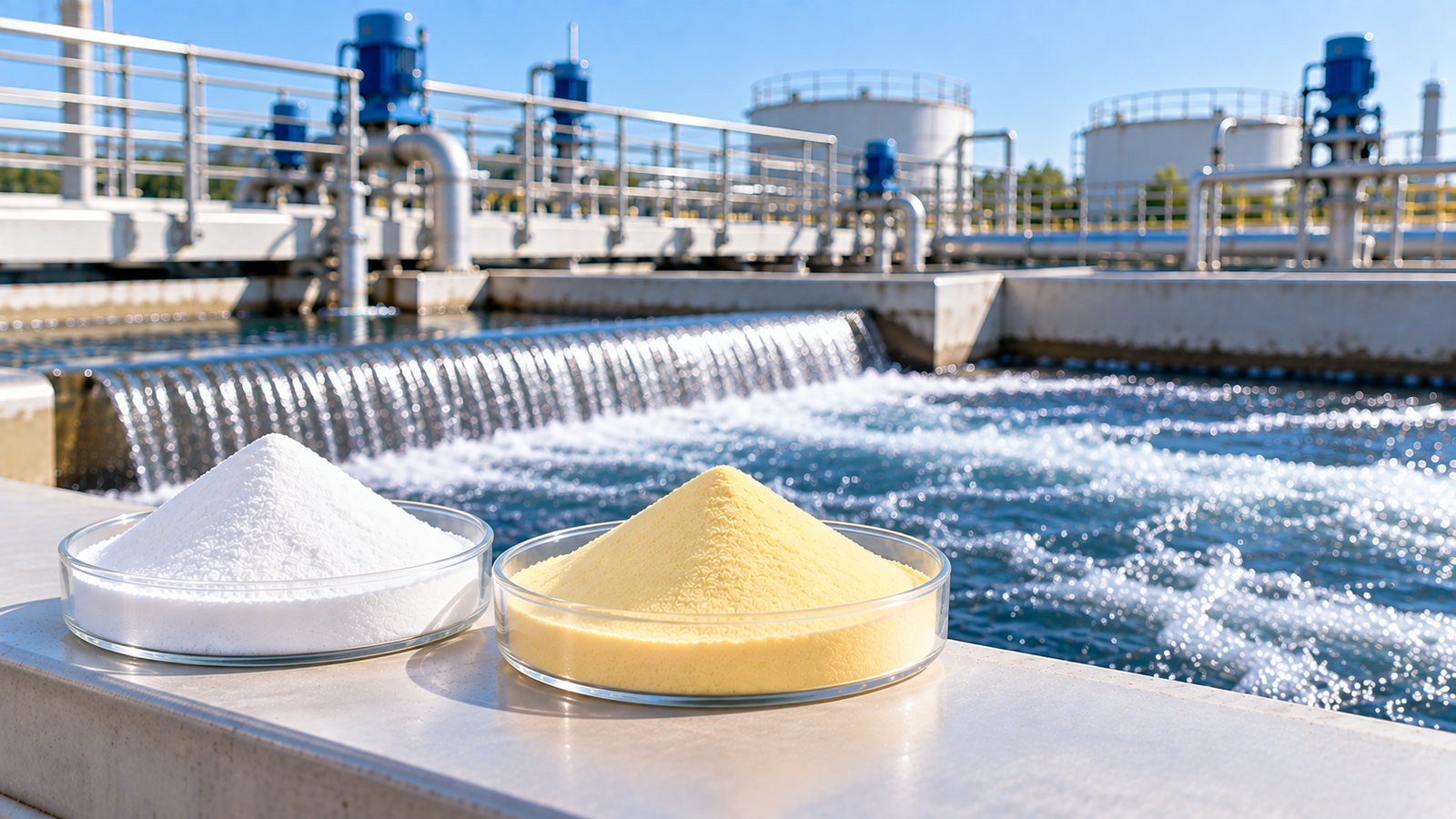
Paper-mill water circuits and wastewater streams differ in suspended solids, organic load, pH and treatment objectives. Coagulation, flocculation and sludge dewatering are related but different duties. Aupha Chem’s published PAC and PAM products give buyers a starting point for reviewing possible chemical functions before process-specific testing.
Where chemical selection matters
Coagulation and clarification
Poly Aluminium Chloride (PAC) is listed as an inorganic coagulant. Evaluate it against the water sample, suspended solids, pH, temperature and upstream chemical program.
Flocculation and settling
Anionic and cationic PAM are distinct polymer categories. Compare ionic character, dissolution/make-down, floc structure and process suitability under controlled jar or bench testing.
Sludge thickening and dewatering
Dewatering is a separate assessment: consider sludge origin, solids content, equipment, cake dryness, filtrate quality and polymer conditioning practices.
Related Aupha Chem product families
Select products according to the process and compare the published pages. The listings below do not imply interchangeability or confirm a grade-specific recommendation.
Poly Aluminium Chloride (PAC)
A coagulant option for clarification; confirm through representative water and jar testing.
Anionic Polyacrylamide (PAM)
A flocculant option to evaluate for suitable clarification and separation duties.
Cationic Polyacrylamide (PAM)
A flocculant option that may be assessed for sludge conditioning and dewatering.
Key information before grade selection
- Raw and treated water analysis, including pH and suspended solids
- Clarifier, flotation, filtration or sludge-dewatering equipment
- Existing coagulant/flocculant products and current dose measurements
- Treatment objective, flow rate, sludge conditions and sampling method
Technical evaluation notes
Do not assume anionic and cationic PAM are interchangeable.
Chemical selection should follow representative jar tests and, where relevant, dewatering tests.
Request the current TDS and safety data for the actual grade being quoted.
Frequently asked questions
Should a mill choose PAC or PAM?
They serve different roles in many treatment trains. PAC is a coagulant, while PAM grades are flocculants; treatment sequence and suitable combinations depend on testing.
What determines the correct PAM ionic type?
Water/sludge characteristics, treatment objectives, other chemistry and equipment affect suitability. Bench testing is needed.
Can a published grade specification determine dosage?
No. A product specification is useful for screening, but dosage must be validated under the site’s actual water and process conditions.
Application-specific Selection Guides
Explore a specific operating problem and the product information needed to evaluate a suitable chemical grade.
PAC vs PAM for Paper Mill Wastewater
Review production variables, related published products and the technical details to include in a quotation request.
Sludge Dewatering Polymer Trials
Compare cake solids, filtrate quality, throughput and polymer consumption on a common basis.
Request an application-specific recommendation
Share a recent water or sludge analysis, treatment equipment, existing chemicals and the required clarification or dewatering result. We will use this information to discuss available published product types and which technical documents or trials are needed.